Adaptasi Strategi Logistik Militer dalam Optimalisasi Distribusi Logistik Kemanusiaan di Wilayah Kepulauan Terpencil (Sebuah Studi Literatur)
DOI:
https://doi.org/10.59447/dedication.v5i1.196Keywords:
Military Logistics, Naval Power, Humanitarian Logistics, Sea-Based Logistics, Remote IslandsAbstract
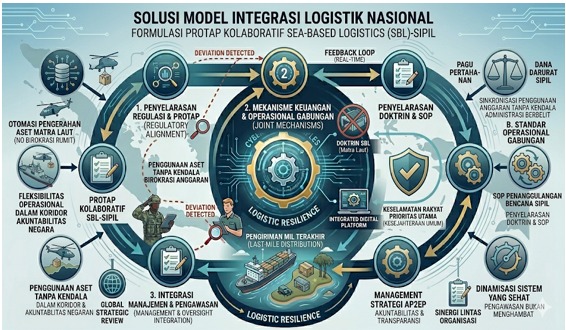
This research aims to examine the potential adaptation of Naval military logistics strategies to optimize humanitarian logistics distribution in remote archipelagic regions. Utilizing a descriptive qualitative method with a Systematic Literature Review (SLR) approach of literature from the 2020-2026 period, this study dissects the concept of Sea-Based Logistics through domain, taxonomic, and componential analyses. The findings indicate that military advantages in floating infrastructure and integrated command chains can effectively bypass distribution barriers in areas lacking port facilities. The study concludes by recommending a military-civilian logistics integration model as a strategic solution for national logistics resilience in coastal areas. The effectiveness of this strategic adaptation relies not only on physical operational aspects but also on the synchronization of budgetary policies and the integration of information technology within the supply chain. From a logistics economics perspective, utilizing naval assets as floating bases mitigates the risk of high costs resulting from post-disaster land infrastructure damage. This synergy necessitates the establishment of collaborative Standard Operating Procedures (SOPs) between military and civilian authorities to create a humanitarian logistics ecosystem that is more resilient, transparent, and capable of responding to crisis dynamics in outlying regions in real-time
References
Badan Pemeriksa Keuangan Republik Indonesia. (2023). Standar Pemeriksaan Keuangan Negara (SPKN). Jakarta: BPK RI.
Chakim, M. H. R., Septiani, S., Hadikusumo, R. A., Noerhatini, P., Nusantoro, H., Sandira, N. F. A., Herdiyanti, Nalibratawati, R., & Sarah, N. (2025). Manajemen Distribusi: Strategi, Logistik, dan Inovasi. Serang: Sada Kurnia Pustaka.
Christopher, M. (2022). Logistics & Supply Chain Management (6th ed.). London: Pearson Education.
Hardiyansyah. (2020). Kualitas Pelayanan Publik: Konsep, Dimensi, Indikator dan Implementasinya. Yogyakarta: Gava Media.
Heru Sancoko, Siti Patimah, Koderi, dan Ahmad Isnaeni (2023). Model Manajemen Strategi Pembinaan Mental Spiritual Militer dengan Pendekatan AP2EP. Edukasi Islami: Jurnal Pendidikan Islam, Vol : 12/No: 02 Mei 2023
Kovács, G., & Spens, K. M. (2020). Humanitarian Logistics in the Context of Natural Disasters. London: Routledge.
Pemerintah Republik Indonesia. (2021). Peraturan Presiden Republik Indonesia Nomor 12 Tahun 2021 tentang Perubahan atas Peraturan Presiden Nomor 16 Tahun 2018 tentang Pengadaan Barang/Jasa Pemerintah. Jakarta: Sekretariat Negara.
Ramadhan, F. (2025). Relevansi Pemikiran Muhammad Baqir As-Sadr Mengenai Teori Produksi Dan Distribusi Di Era Modernisasi. Taraadin: Jurnal Ekonomi dan Bisnis Islam, 5(2), 21-33.
Sugiyono. (2019). Metode Penelitian Kuantitatif, Kualitatif, dan R&D. Bandung: Alfabeta.
TNI AL. (2023). Doktrin Strategis Operasi Militer Selain Perang (OMSP) dalam Penanggulangan Bencana. Jakarta: Mabesal.